_edited.jpg)
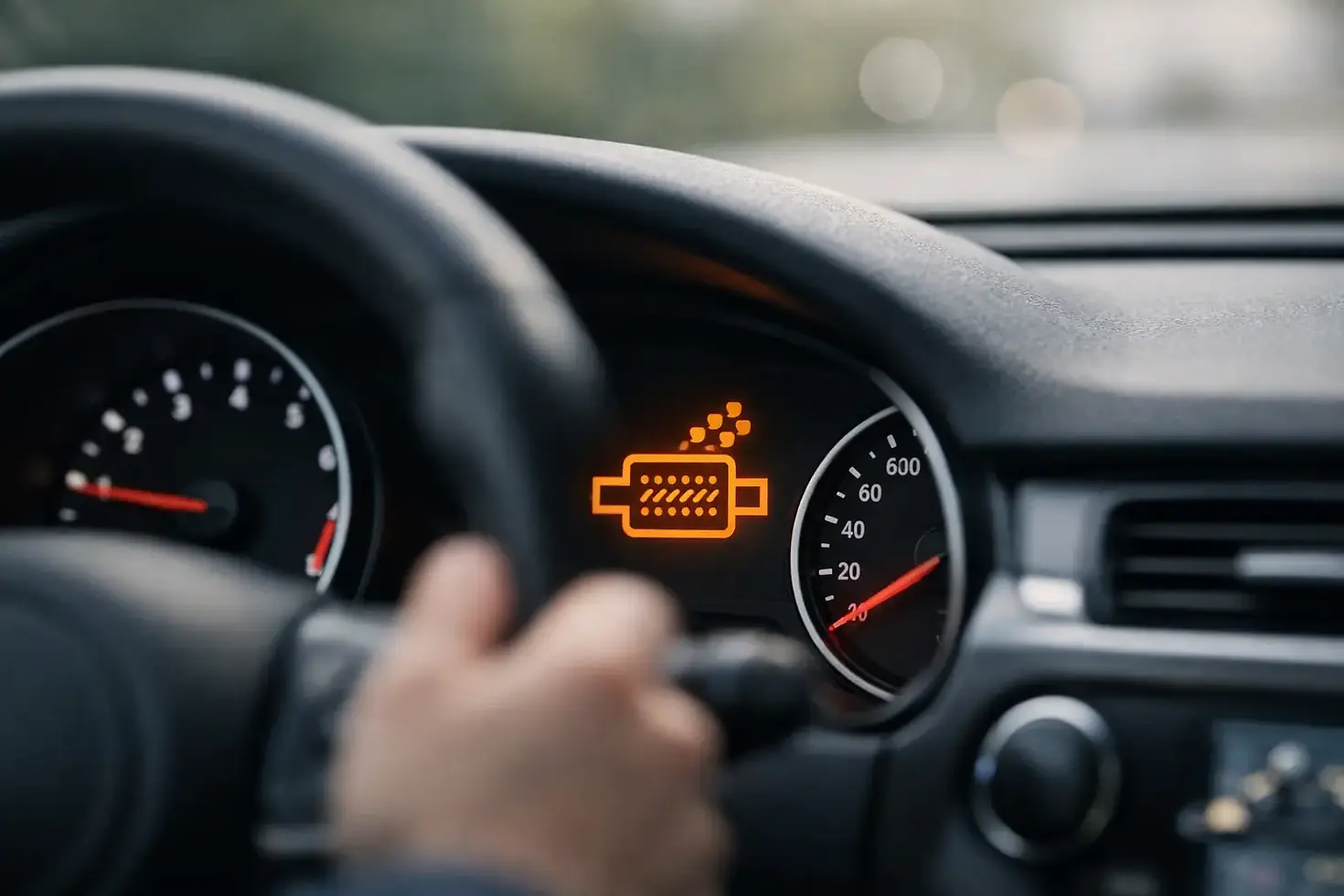
Driver Guide to DPF Warning Lights

That yellow DPF light rarely appears at a convenient time. It comes on when you are heading to work, carrying tools to a job, or trying to get home without another garage bill. This driver guide to DPF warning lights is here to give you a straight answer on what the light usually means, what you should do next, and when not to risk carrying on.
A lot of drivers are told the same unhelpful thing - it just needs a regen. Sometimes that is true. Quite often, it is only part of the story. A DPF warning light can be caused by soot loading, but it can also be linked to failed sensors, pressure issues, poor combustion, EGR faults, injector problems, or a filter that is too full of ash to recover properly. Clearing codes without checking live data is guesswork, and guesswork is expensive.
What the DPF warning light is actually telling you
Your diesel particulate filter is there to trap soot before it leaves the exhaust. Over time, that soot has to be burned off through regeneration. When the system cannot complete that process properly, the vehicle starts warning you.
On some vehicles, the first warning is a basic DPF symbol. On others, you may see an engine management light at the same time, a glow plug light flashing, or an emissions warning message. The exact symbol varies by make and model, but the message is similar - the car thinks the filter is loading up or the system managing it is not working as it should.
That does not automatically mean the DPF itself is ruined. It also does not mean it is safe to ignore. The real question is why the warning has appeared.
Driver guide to DPF warning lights: the stages matter
Not all warning lights mean the same level of urgency. A steady DPF light is different from a DPF light combined with limp mode. If the vehicle still drives normally, you may be at an early stage where a proper regeneration is still possible. If power is reduced, the system may have reached a point where it is protecting the engine and exhaust from further damage.
A single warning light with no obvious loss of power can sometimes be caused by interrupted short trips. Diesels used for school runs, town driving, and stop-start traffic often struggle to get hot enough for the filter to regenerate fully. In that case, the problem may be recoverable if dealt with quickly.
If the light is joined by an engine warning light, poor performance, high fuel use, frequent fan operation, or the vehicle dropping into limp mode, there is a stronger chance that the blockage is more severe or another fault is stopping the DPF system from doing its job.
If you notice excessive smoke, a strong hot smell, rough running, or repeated warnings returning soon after being cleared, it is time to stop guessing and get the vehicle checked properly.
When you can keep driving - and when you should not
This is where a lot of bad advice gets handed out. Some drivers are told to take it on a fast run no matter what. That can work, but only in the right circumstances.
If the DPF light has just come on, the vehicle is not in limp mode, there are no other serious warning lights, and the engine is otherwise running normally, a sustained drive at proper operating temperature may allow an active regeneration to complete. That usually means a steady run at higher road speed, not ten minutes around town.
But if the car is already down on power, warning lights are stacking up, the oil level has risen, or the engine is clearly not right, forcing it to drive harder can make things worse. A failed sensor, injector fault, turbo issue, or excessive soot load will not fix itself because you took the bypass home.
There is also a point where the filter becomes too blocked for an on-road regen to be safe or effective. Push past that point and you can end up with overheating, cracked internals, or a vehicle that will not complete regeneration at all.
The common reasons DPF warnings keep coming back
A recurring DPF light is usually a sign that the root cause has not been found. The filter is often treated as the problem when it is really the victim.
Short journeys are one obvious cause, especially for diesel cars used like petrol cars. But there are others. Faulty differential pressure sensors can give false readings. Exhaust gas temperature sensors can stop the system from managing regen correctly. An EGR valve that is sticking can increase soot production. Injector issues can upset combustion. Turbo faults can affect airflow. Even a thermostat running the engine too cool can stop regeneration from completing.
Then there is ash. Soot can be burned off. Ash cannot. Ash builds up gradually from oil additives and normal engine operation, and once the DPF reaches that stage, regeneration alone will not restore it. That is why proper assessment matters. You need to know whether the filter is soot-loaded and recoverable, ash-loaded and restricted, or damaged beyond sensible repair.
Why proper diagnostics matter more than code clearing
A fault code is a clue, not a diagnosis. If someone plugs in a scanner, clears the codes, and sends you away, they have not proved the problem is fixed.
A proper DPF assessment should include fault code checks, live data, pressure readings, soot load analysis, and road testing where appropriate. Back pressure testing is especially useful because it helps show whether the filter is genuinely restricted and how severe that restriction is. Live data can reveal whether sensors are behaving properly, whether temperatures are high enough for regen, and whether the ECU is even requesting regeneration.
This is the difference between trying to silence a warning light and actually solving the issue. Sometimes the answer is a professional regeneration. Sometimes the DPF needs cleaning. Sometimes it needs reconditioning or replacement. And sometimes the real fix sits elsewhere in the engine system.
That honesty matters, because there is no cheap miracle fix for every blocked DPF. Additives, forced regens, and code clears all have their place, but only if they match the condition of the vehicle.
What a specialist should check before recommending replacement
DPF replacement is sometimes necessary. It is not always necessary. Many drivers are quoted for a new filter before anyone has confirmed whether the existing one can be saved.
Before replacement is suggested, the vehicle should be checked for sensor faults, pressure readings, temperature behaviour, soot and ash levels, and any engine issues that caused the blockage in the first place. If those checks are skipped, you could end up paying for a new DPF that blocks again because the underlying fault was never corrected.
An honest specialist will also tell you when the filter is past recovery. If the core is cracked, melted, contaminated, or heavily ash-loaded, cleaning may not be enough. That is not bad news - it is useful news. The point is to make the right repair once, not spend money twice.
A practical driver guide to DPF warning lights in the real world
If the warning has just appeared, do not panic, but do not ignore it either. Pay attention to how the vehicle is behaving. Is there any loss of power? Is the engine management light also on? Has fuel consumption worsened? Has it been used mostly for short runs lately?
If it is an early-stage warning and the vehicle is driving normally, a proper longer run may help it complete regeneration. If the light stays on, comes back quickly, or the vehicle is in limp mode, book a diagnostic check before the problem escalates.
For van owners, tradespeople, and anyone relying on their vehicle for work, delay often costs more than action. A minor soot-loading issue can turn into a non-start, a failed MOT, or a filter beyond recovery if left too long.
This is also why mobile diagnosis makes sense for many drivers. Having the vehicle assessed on site saves the hassle of towing, workshop waiting, and losing another day to uncertainty. A service such as Terraclean Mobile DPF Clean focuses on diagnosis first - live data, back pressure checks, soot and ash assessment, regeneration where suitable, and clear advice if cleaning will not be enough.
What to do next if your DPF light is on
The best next step depends on the warning stage. Early warning with normal driving may allow a controlled run to assist regeneration. Repeated warnings, limp mode, or multiple fault lights call for proper testing as soon as possible.
What matters most is avoiding false economy. The cheapest-looking fix is often the one that leaves the real fault in place. Good diagnostics cost less than unnecessary replacement, and they cost far less than repeated breakdowns.
If your diesel is showing a DPF warning, treat it as a message to investigate, not just a light to remove. Clear answers beat guesswork every time.


Comments