_edited.jpg)
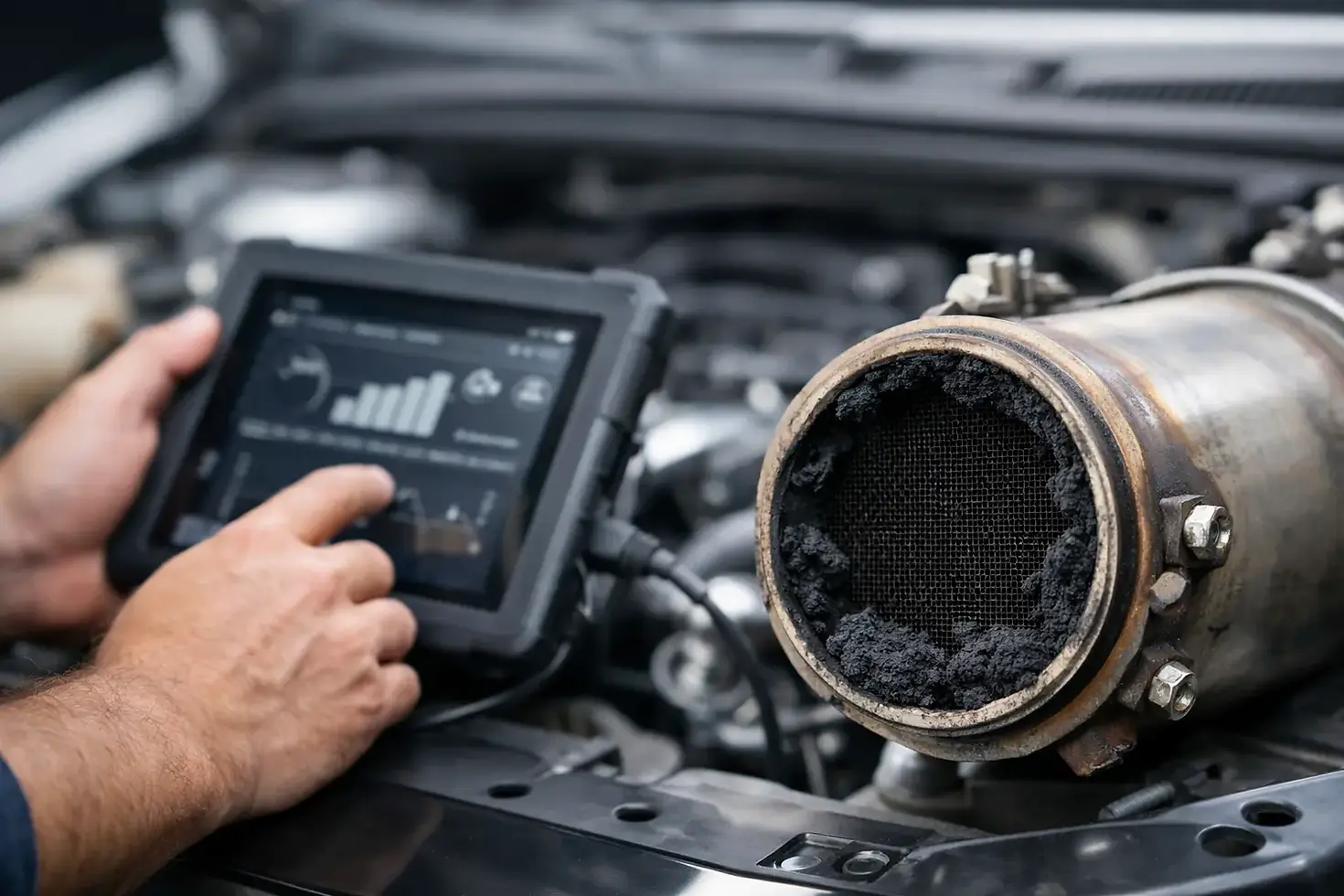
DPF soot loading check - what it tells you

When the DPF light comes on, most drivers are not asking for theory. They want to know one thing - is this a quick fix, or am I about to be hit with a big bill? A proper dpf soot loading check is one of the fastest ways to answer that, because it shows how full the filter is, how the vehicle is behaving in real time, and whether the problem is actually the DPF or something else feeding the fault.
That matters because plenty of diesel owners get steered towards the wrong repair. A warning light, limp mode, failed regeneration or MOT emissions issue does not automatically mean the filter needs replacing. Just as often, the real problem is poor combustion, a failed sensor, pressure reading errors, injector issues, thermostat faults or a pattern of short journeys that has pushed soot levels too high.
What a DPF soot loading check actually means
Soot loading is the amount of combustible soot trapped inside the diesel particulate filter. Your engine management system estimates or measures this using sensor data, driving conditions and pressure readings across the filter. As soot builds up, exhaust flow is restricted and the vehicle may try to regenerate to burn it away.
A dpf soot loading check looks at that build-up and puts it into context. On its own, one soot figure is not enough. It needs to be compared with fault codes, differential pressure, exhaust temperatures, regeneration history and the way the vehicle is running. That is why simply plugging in a scanner and reading one number can be misleading.
There is also a difference between soot and ash. Soot can usually be removed by regeneration or specialist cleaning if the filter and the rest of the system are still healthy. Ash is the non-combustible residue left behind over time from oil additives and normal use. Once ash loading is too high, cleaning options may be limited and replacement or reconditioning may be the honest answer.
Why soot loading figures can be misleading
Drivers are often told their DPF is "100% blocked" when the real picture is more complicated. Some vehicles report calculated soot mass, some show measured values, and some estimates can be thrown off badly by faulty sensors or interrupted regenerations.
For example, if the differential pressure sensor is reading incorrectly, the car may report high soot loading even when the filter is not physically as blocked as the data suggests. If an exhaust gas temperature sensor has failed, the car may stop regenerating properly and soot loading will keep rising, but replacing the DPF without fixing the sensor solves nothing.
This is where experience matters. You are not just looking for a fault code. You are checking whether the numbers make sense against the vehicle in front of you.
How a proper DPF soot loading check is carried out
A proper assessment starts with diagnostics, not guesswork. The first step is to read stored and pending fault codes, then check live data from the DPF system and related engine sensors. That includes soot loading, ash values where available, differential pressure, exhaust temperatures and the status of recent or aborted regenerations.
After that, the physical behaviour of the system needs checking. Back pressure testing helps confirm how restricted the filter really is. This is important because live data can point one way while the actual pressure readings tell a different story. If the back pressure is too high, the filter may be heavily loaded or physically restricted. If the pressure is normal but the soot reading is extreme, sensor error becomes far more likely.
Road testing can also be part of the process. Some faults only show up under load, at certain temperatures or during attempted regeneration. A van that idles fine on a driveway may still drop into limp mode on the road because pressure or temperature values move out of range once the engine is working properly.
That full picture is what separates a real diagnosis from a quick code clear.
What the results can tell you
If soot loading is high but ash loading is still manageable, the filter may be a good candidate for a proper clean and forced regeneration - provided the cause of the blockage is also dealt with. If soot is high because the vehicle has been doing repeated short runs, there is often a sensible route forward.
If soot loading is high and the vehicle has underlying faults such as a bad thermostat, EGR issues, injector imbalance or failed pressure sensors, those faults need sorting first. Otherwise the DPF will block again, sometimes very quickly.
If ash loading is excessive, or if the filter substrate is damaged, melted or cracked, cleaning may not be enough. This is where honest advice matters most. Not every DPF can be saved, and pretending otherwise only wastes time and money.
DPF soot loading check before cleaning or replacement
One of the biggest mistakes in this trade is treating every blocked DPF the same way. Some garages jump straight to replacement. Others try additive treatments or basic regenerations without proving the filter is suitable. Neither approach protects the customer.
A dpf soot loading check before any cleaning or replacement gives you a much firmer basis for a decision. It helps answer practical questions. Is the filter overloaded with soot but still recoverable? Is there too much ash for cleaning to make sense? Are sensor faults giving false readings? Is an engine problem causing repeat soot build-up? Has the vehicle been interrupting regenerations because it never gets hot enough for long enough?
Without those answers, you are spending money in the dark.
Common symptoms that point to high soot loading
Most drivers notice the same handful of warning signs. The DPF light appears, the engine management light follows, fuel consumption worsens, the cooling fans run on after shutdown, or the vehicle feels flat and drops into limp mode. Some owners also notice a strong hot smell during failed regeneration attempts or find the idle speed sits slightly higher than normal.
Those symptoms do not confirm the filter needs replacing. They confirm the vehicle needs checking properly.
That is especially true for working vans and daily diesel cars around Plymouth, Bodmin, Launceston, Okehampton and Exeter, where missed jobs and downtime matter as much as repair cost. Waiting too long can turn a recoverable blockage into a more serious fault.
Why recurring DPF faults keep coming back
A blocked DPF is often the end result, not the root cause. If the engine is over-fuelling, if the turbo is not performing properly, if the EGR valve is sticking, or if temperature sensors are not allowing regeneration to complete, soot will keep returning. Even something as basic as a thermostat stuck open can stop the engine reaching the correct operating temperature.
That is why a proper mobile service should not just chase the warning light. It should check the whole chain behind it. Terraclean Mobile DPF Clean works on a diagnosis-first basis for exactly that reason. The goal is to tell you whether the filter can be cleaned, whether another fault is causing the blockage, or whether replacement is genuinely the sensible route.
Is it safe to keep driving?
Sometimes, briefly. Sometimes, no.
If the vehicle is only showing an early warning and is still driving normally, there may be a short window where a proper run or professional intervention can prevent things getting worse. But if it is in limp mode, struggling for power, showing multiple warning lights or repeatedly failing regeneration, carrying on can increase exhaust back pressure and push other components under strain.
The risk depends on how loaded the filter is and why. That is another reason a soot loading check matters. It replaces guesswork with evidence.
What to do if your DPF light is on
Do not start by assuming the worst, and do not let anyone sell you a replacement unit before the numbers have been checked properly. You need a clear assessment of soot loading, back pressure, regeneration status and any related faults. Once that is done, the next step usually becomes obvious - clean it, repair the cause, or replace only if the filter is beyond recovery.
For drivers under pressure, the practical value is simple. A proper check can stop you paying for the wrong job, stop the fault coming back, and get the vehicle working again with less downtime.
If your diesel is showing DPF warnings, losing power or heading towards an MOT failure, get it looked at while there are still options. The earlier the fault is tested properly, the better the chance of saving the filter and avoiding money wasted on guesswork.


Comments