_edited.jpg)
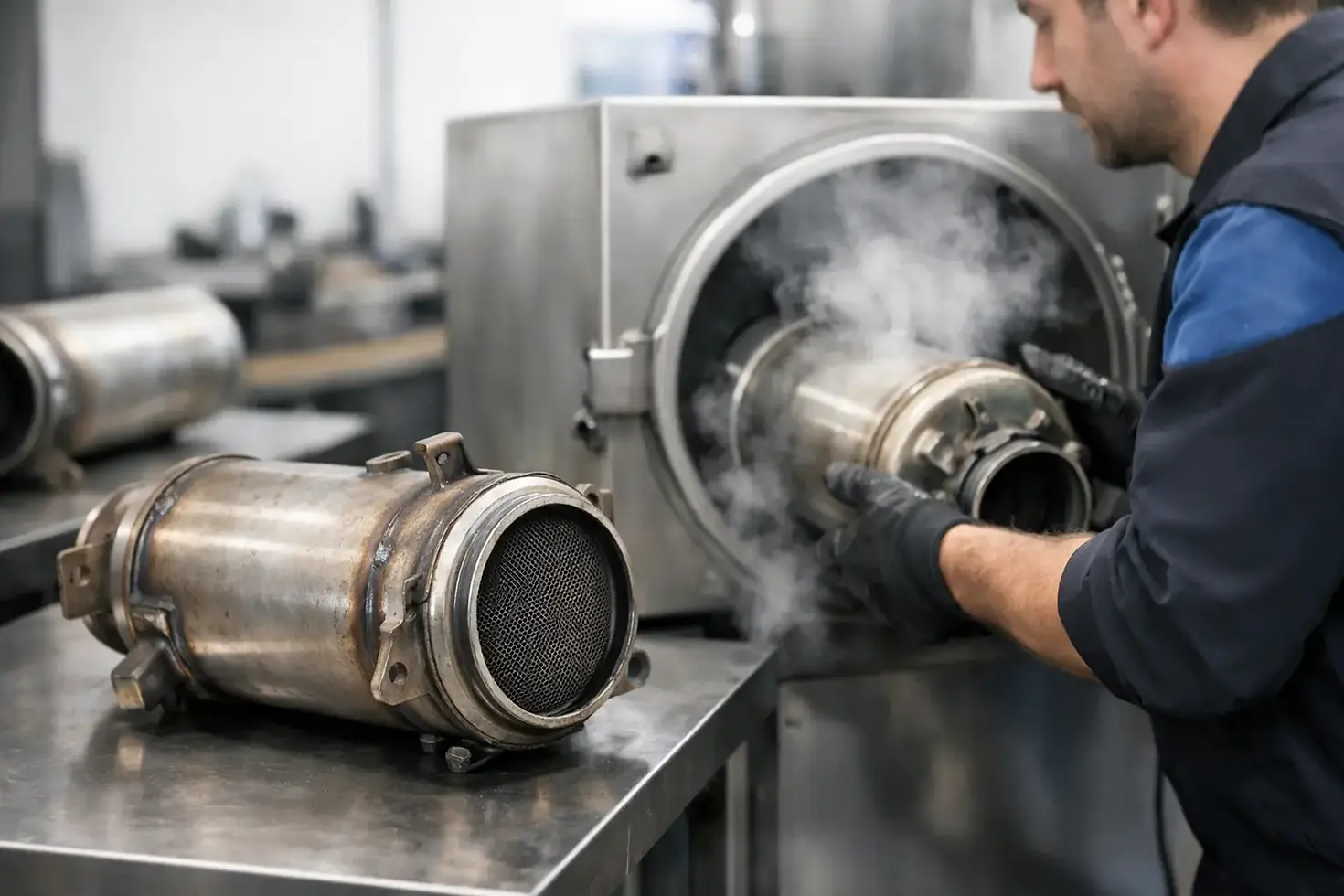
DPF Reconditioning Service Explained

A DPF warning light rarely appears at a convenient time. One day the van is pulling fine, the next it is in limp mode, fuel use has gone up, and every mile starts to feel like a risk. That is usually when people start searching for a dpf reconditioning service - not because they want technical theory, but because they need a straight answer on whether the filter can be saved and what it will actually cost to put right.
The trouble is, not every blocked DPF needs the same fix. Some can be cleaned and returned to good working order. Some are too full of ash to recover properly. Others are not the real problem at all, because the blockage is being caused by a failed sensor, an EGR issue, poor combustion, injector trouble, or a pattern of short journeys that has never allowed the vehicle to regenerate properly. If you skip diagnosis and go straight to a quick fix, you often end up paying twice.
What a DPF reconditioning service should actually include
A proper DPF reconditioning service starts with testing, not promises. If someone offers to clear the fault code, pour in an additive, or force a regeneration without checking the condition of the filter and the system around it, that is not a serious assessment. It might move the warning light for a while, but it does not tell you why the fault appeared in the first place.
The right approach is diagnosis first. That means checking fault codes in context, reading live data, measuring back pressure, looking at soot loading and ash accumulation, and making sense of how the engine is behaving. A diesel particulate filter does not block by accident. There is always a reason behind it, and unless that reason is identified, the problem often comes back.
Reconditioning itself can mean different things depending on the condition of the filter. In some cases, it means carrying out a professional clean after confirming the DPF structure is still sound and the contamination level is recoverable. In other cases, it means proving that the filter is beyond a sensible clean and that replacement is the more honest route. The word matters less than the outcome. What most drivers need is not a label, but a clear answer.
When a blocked DPF can be reconditioned
A DPF can often be reconditioned when the blockage is mainly soot-based and the core of the filter has not been damaged. Soot is a normal by-product of diesel combustion, and under the right driving conditions the vehicle burns much of it off during regeneration. Problems start when regenerations are interrupted, the vehicle is used mainly on short runs, or another fault stops the system doing its job.
If testing shows the filter still has a realistic chance of recovery, a specialist can carry out the correct cleaning and confirm the result with post-work checks. That confirmation matters. You do not want guesswork. You want to know whether back pressure has dropped, whether regeneration behaviour has improved, and whether the live data now points to a functioning system rather than a temporary reprieve.
This is especially important for working vehicles. If you rely on a diesel car or van for commuting, school runs, call-outs, deliveries, or trade work, you need more than a reset and a bit of optimism. You need confidence that the vehicle can go back into daily use without putting you straight back into the same fault cycle.
Soot blockage is not the same as ash build-up
This is where many drivers get mixed messages. Soot can often be cleared if the DPF is otherwise healthy. Ash is different. Ash is the non-combustible residue that builds up over time from oil additives and normal engine operation. Unlike soot, ash does not burn away during regeneration.
Once ash loading becomes severe, the DPF may no longer have enough internal capacity to work properly, even if soot is removed. That is why a genuine assessment needs to look beyond the dashboard light. A vehicle with high ash loading might still appear to improve after a basic intervention, but the underlying restriction remains. In that situation, promising a full recovery would not be honest.
Why diagnostics matter before any DPF cleaning or reconditioning
If a DPF blocks once, there may be a usage issue. If it blocks repeatedly, there is usually a root cause that needs attention. This is where proper diagnostics separate a specialist from a quick-fix operator.
Live data can reveal whether pressure readings make sense, whether temperature sensors are behaving properly, and whether the engine is meeting the conditions needed for regeneration. Back pressure testing helps show how restricted the filter really is. Fault code reading on its own is not enough, because codes only tell part of the story. The important part is understanding what the vehicle is doing in real time.
A forced regeneration, for example, can be the right step in some cases. In others, it is the wrong move entirely. If the DPF is too blocked, if temperatures are not reaching the right range, or if another fault is causing excess soot production, forcing a regen can waste time and add stress to an already struggling system. That is why no-nonsense advice matters. Sometimes the right answer is clean it. Sometimes it is repair the underlying fault first. Sometimes it is replace the filter and stop throwing money at a part that cannot be saved.
What to expect from a mobile DPF reconditioning service
For many drivers, the biggest problem is not only the fault itself but the disruption around it. Taking time off work, waiting for workshop availability, arranging recovery, or trying to nurse a vehicle across town in limp mode only adds to the stress.
A mobile service changes that. The vehicle can be assessed where it is, whether that is at home or at work, and the diagnosis can start without the usual delays of workshop booking and drop-off. For customers across Plymouth, Bodmin, Launceston, Okehampton, Exeter and nearby areas, that can make the difference between dealing with the problem quickly and losing days to it.
Terraclean Mobile DPF Clean works on that diagnosis-first basis. The point is not to sell a clean at all costs. The point is to find out what condition the filter is in, what is causing the blockage, and whether reconditioning, repair, or replacement is the sensible next step. That protects the customer from unnecessary spending and helps avoid the familiar cycle of temporary fixes followed by another warning light.
Honest outcomes are better than cheap promises
Drivers are often told what they want to hear. Yes, it can be cleaned. Yes, the light can be reset. Yes, this treatment will sort it. The problem is that a cheap answer is not always a true one.
An honest specialist will tell you when the DPF is recoverable and when it is not. They will also tell you if the filter is only part of the problem. If a sensor fault, turbo issue, injector imbalance, or EGR problem is feeding the blockage, that needs to be addressed. Otherwise, even a successful clean can be short-lived.
That honesty is worth more than a low headline price. Reconditioning a filter that has a genuine chance of recovery can save a great deal compared with replacement. But pushing a clean on a filter that is physically damaged or heavily ash-loaded is false economy.
How to tell if you need help now
If the DPF light is on, the vehicle is in limp mode, it is struggling to regenerate, or you are facing an MOT or emissions concern, it is better to get it checked sooner rather than later. Leaving the fault to worsen can push a recoverable DPF into a more expensive situation. What starts as a partial blockage can turn into severe restriction, repeated failed regens, or damage elsewhere in the system.
There is also the question of drivability. Reduced power, rising fuel consumption, cooling fan behaviour after short trips, a strong hot smell during failed regenerations, and repeated warning messages all point to a system that needs proper attention. None of those signs tell the full story on their own, but together they tell you the vehicle is asking for more than a code clear.
Choosing the right DPF reconditioning service
The best service is not the one making the biggest claim. It is the one willing to test first, explain clearly, and give you a straight answer. Ask what checks are carried out before any cleaning. Ask whether back pressure and live data are reviewed. Ask how the result is confirmed afterwards. And ask what happens if the filter cannot be saved.
Those questions matter because they quickly reveal whether you are dealing with real diagnosis or a scripted sales pitch. A proper specialist will not be offended by them. They will expect them.
If your diesel has started showing DPF symptoms, the sensible next step is not guesswork. It is getting someone experienced to assess the vehicle properly, tell you whether reconditioning is realistic, and help you spend money only where it makes sense. When you are already dealing with warning lights, downtime and conflicting advice, that kind of clarity is what gets people moving again.


Comments